
By Rhea Catada
(Originally published in the old Oxfam Philippines blog, on 12 February 2015)
2026 note: On January 25, 2015, the Philippine National Police Special Action Force (SAF) launched an operation in Tukanalipao, Mamasapano, to capture a Malaysian terrorist wanted by the FBI. At the time, the peace agreement between the Philippine government and the Moro Islamic Liberation Front (MILF) was still fragile. The operation was carried out without coordination through established ceasefire mechanisms, resulting in a firefight that killed more than 60 people, including an eight-year-old child.
I remember how the national media focused overwhelmingly on the 44 fallen SAF officers, largely ignoring the other lives lost and the implications for the peace process. The coverage fueled anti-Muslim sentiment, with some even calling for Mindanao to be bombed.
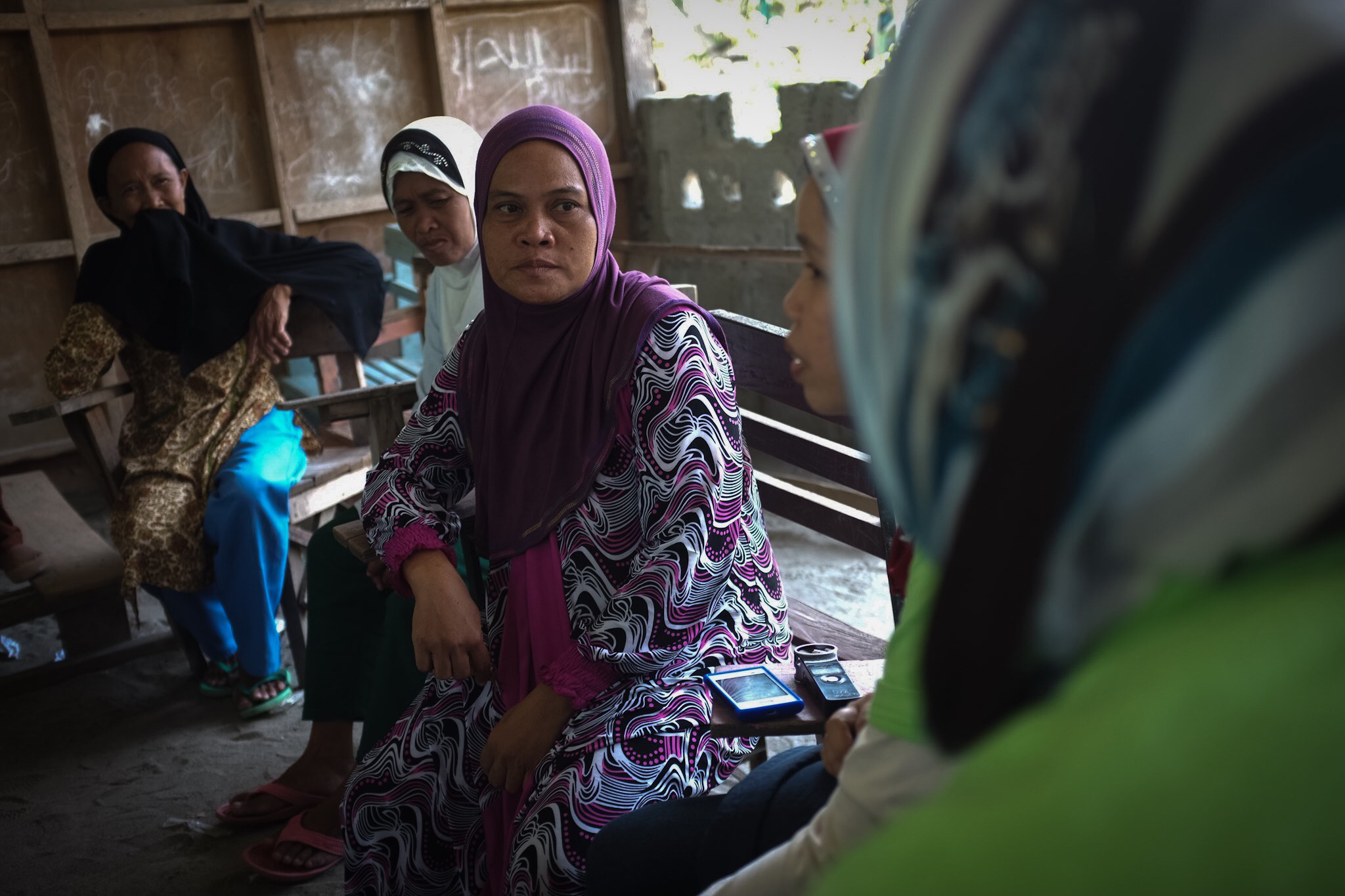
Seventeen days later, I joined a women-led mission with Oxfam and partners to listen to the voices largely made invisible by the national media. This story documents that visit.

Cotabato City (February 12, 2015) —- The cornfield in Brgy. Tukanalipao, Mamasapano that became a battlefield during the armed clashes between the PNP-Special Action Forces and Moro fighters continues to cause suffering. It is a farm that supported the lives of a single mother and her 10 children. After the armed encounter, Bai Puti Kusain, the 37-year-old mother can neither work nor simply go near her farm because of fear of dormant grenades suddenly exploding. Without a way to provide for her family, the suffering continues.
Her ordeal was among many previously unheard stories that surfaced during a women-led mission in Mamasapano. Dubbed “Tingog Mamasapano” (Voices from Mamasapano) the activity was organized as a women’s solidarity and listening mission. The women are now sharing the stories and raising their voices in solidarity with all families that have lost loved ones due to violent conflict.

Hidden from the limelight and almost forgotten were the stories of the civilian members, particularly the women and children, of the communities living in Brgy. Tukanalipao. “During yesterday’s mission, we met Bai Puti Kusain, the owner of the cornfield and the first cousin of one of the civilians who died, a farmer named Badrudin Langalan. Now, aside from grieving the death of her cousin, she is worried where she will get the money for the daily expenses of her 10 children, and for the loans she previously made to buy fertilizer for her land,” said Sophie Pagital of Mindanao People’s Caucus. Kusain’s experience is just one among the many narratives not being heard amidst the noise of the ongoing public discourse that has focused mostly on who should take the blame for the recent tragedy.

“It is unfortunate that no one gets to hear the stories of people from affected communities. This is why we held this mission. It is not meant to find fault or determine who is responsible for the clash, but to surface the impact of the clash on the civilians, particularly women and children, because they are the ones who mostly suffer the brunt in a situation of armed conflict. We hope the media, the government and the MILF will give equal attention to the loss that all have suffered,” said Noraida Abo of the CSO group Unyphil Women.
The information at hand is reporting 6,620 people have been displaced, most of them struggling to find sources of income after leaving behind their livelihoods. Civilians like Kusain are worried that aside from losing loved ones, they will once again be displaced — away from their homes and away from their farms—burying them deeper into poverty.
“The recent tragedy should compel us to be more unyielding in pursuing the path towards just and lasting peace. The suffering and ongoing cost to all Filipina is evident.” said Lyca Sarenas of the Oxfam Mindanao Programme.
“We should continue to support the political process that has begun, aimed at establishing governance and institutional mechanisms that will lay the foundations for a more durable peace,” Sarenas added. “There will always be difficulties and challenges, but we should not lose sight of the big picture- this is the time to seek long-term solutions to end decades of armed conflict that have plagued Mindanao.”
“I’ve spent most of my life hoping that peace will finally come to my land. Everyone here just wants the government to do something to make peace a reality in my community,” 50-year-old Bidarya Adam told one of the women CSO leaders who came to her community. She lives with her grandchildren near where the armed clashes took place. Adam is one of the many women who spent most of her life witnessing the atrocities of armed conflicts. Despite this, she is not losing hope. “Someday, we will all walk together in my community, and everything will be fine, and it will finally be peaceful.”

Leave a Reply